The Dead Do Tell Tales: Leadership, Justice, and Deadly Coercion
Perhaps there is no more unifying human experience than death. At the same time, many people are inherently uncomfortable with the idea of dying in an unnatural way. This class examines various forms of unnatural death throughout the past to help us understand the ways people in power have sought to control and manipulate the experiences of the living. Through this history-focused course, we will consider how death, and the threat of death, has been leveraged by leaders in the name of (in)justice. In so doing, we will interrogate key themes of punishment, violence, religion, totalitarianism, media, and more.
Inside the Classroom
This course will address death particularly unnatural death in a variety of historical contexts. Through these units, you will grapple with issues of murder, genocide, punishment, memory, true crime, and more. In so doing, you will develop a deeper understanding of how death functions in our society and how your own mortality is both an inevitable experience and a constructed phenomenon.
Academically, this course will require various low-stakes assessments and opportunities for revision, allowing you to practice building and supporting arguments, crafting stakes-based conclusions, and analyzing counterarguments. For example, response journals on the (re)presentation of death in our class media sources, including Coco (2017) and The Princess and the Frog (2009), will encourage you to examine two cultures that blur the line between the living and the dead. In so doing, you will consider what the filmmakers want audiences, particularly children, to understand about death itself. In contrast, we will also examine classic horror films to interrogate the intersection of entertainment and fear through visual media.
These kinds of assignments will be accompanied by more creative ones, including the writing of one’s own eulogy or planning one’s own funeral. This exercise will not only require you to confront your own mortality, but it will ask you to reflect on the totality of your life until this point. Taking stock of your memory and legacy while still young will hopefully inspire you to align your actions and your values in this course and beyond. Combined, traditional and creative opportunities to display competence in a low-stakes environment will give you the space to earnestly grapple with death.
Outside the Classroom
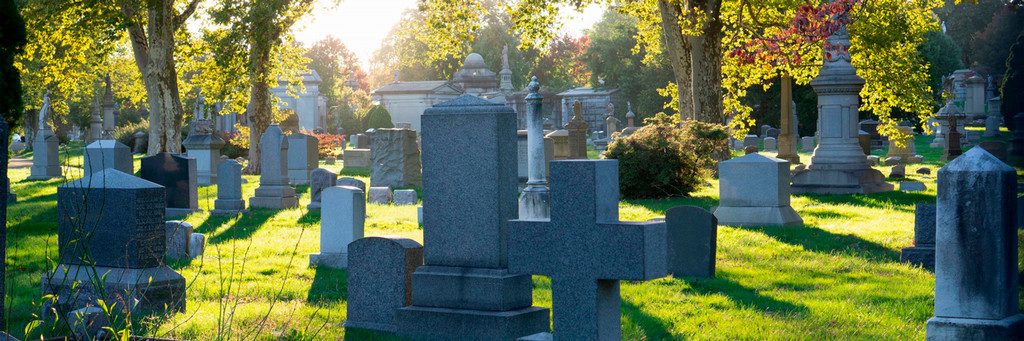
This course will employ multiple best practices: a community-based project that will take you into the Richmond community to work in a neglected cemetery and ask you to consider the implications of injustice in both life and death. In the fall semester, we will partner with Woodland Cemetery, finding people who died unnatural deaths and creating obituary-style biographies for those individuals using historical archives and records. In addition, our planned class trips to New Orleans and Boston/Salem will help to embody some of our in-class work and examine different ways of living with death, and the ways that living with death can often be both an affirmation of life and a means of advocacy.
Research and Capstone Experience
Understanding Life Through Death: Choose a person from Boston/Salem, New Orleans, and Richmond whose graves we visited and whose lifetimes overlap. You will be asked to place your three people in historical context: discuss what is happening in the world in the generation in which your people lived, talk about at least one major historical event and how would have impacted those people, and create a portfolio of their lives that shows intersections and contrasts. You will be asked to present about your chosen people and to create a memento mori for each of them. At the end of the spring, we will create a whole-class display (like a museum display) covering all the lives of these people and how they relate to one another.